
Core strength for Krav Maga is the foundation of powerful strikes, stable movement, and effective self-defence. Without a strong core, even skilled technique can fall apart under pressure.
Why Core Strength Matters in Krav Maga
In Krav Maga, every movement connects to the core. Your arms and legs carry out visible actions like punches and kicks, but the torso generates power and stability. When you strike, block, or escape a grab, your hips, abs, and lower back drive the motion.
The European Federation of Krav Maga (FEKM) emphasises that efficient, direct technique depends on body mechanics, not brute force. A strong core allows practitioners to transfer energy from the ground through the body into strikes, making each move faster and more impactful. It also provides balance during dynamic situations such as defending against multiple attackers or sudden pushes.
When adrenaline hits and fatigue sets in, the core stabilises your frame. A weak core makes it harder to maintain posture or recover from counters. A strong one helps you stay composed, efficient, and ready to react.
The Science of Core Training
Research supports the importance of core conditioning in martial arts and combat sports. Studies published in the Strength and Conditioning Journal show that core stability improves balance, movement efficiency, and injury prevention. For Krav Maga, this means staying mobile while under threat and avoiding strains from awkward movements.
The core isn’t just “abs.” It includes deep stabilising muscles: the transverse abdominis, multifidus, pelvic floor, and obliques. Together, they act as the body’s anchor. Training them ensures that power flows smoothly during explosive movements.
Training Core Strength for Krav Maga
Core strength for Krav Maga requires a mix of stability, rotation, and dynamic movement. Instead of chasing six-pack aesthetics, focus on exercises that carry over to self-defence scenarios.
- Planks and side planks: Build endurance and stability for long defensive sequences.
- Hanging knee or leg raises: Strengthen hip flexors and lower abs for knee strikes and escapes.
- Russian twists: Train rotational power for punches, elbows, and throws.
- Bird dogs and dead bugs: Enhance coordination and control for defensive pivots.
- Medicine ball slams: Develop explosive power, mimicking the energy needed in sudden defence.
A balanced weekly routine might include:
- Front plank: 3 × 45 seconds
- Side plank: 3 × 30 seconds per side
- Hanging leg raises: 3 × 10 reps
- Russian twists: 3 × 12 reps each side
- Medicine ball slams: 3 × 15 reps
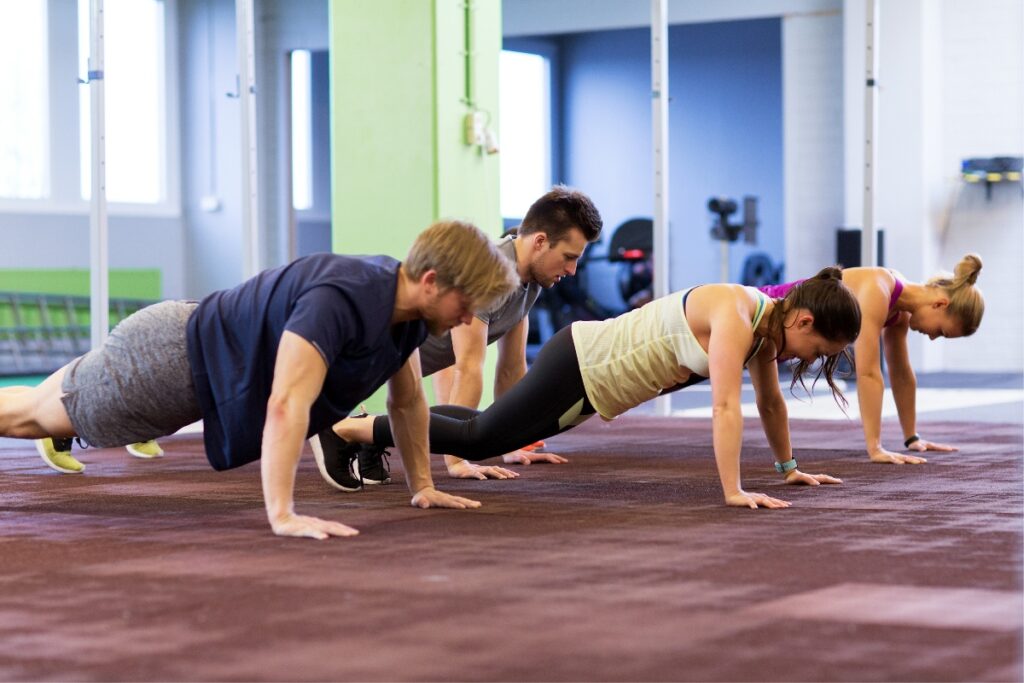
Perform this two to three times a week alongside regular Krav Maga training. Prioritise technique over repetition; quality beats quantity.
How Core Strength Translates to Krav Maga
Core strength directly improves common Krav Maga techniques:
- Punches: A jab or cross becomes heavier when hips and abs rotate together.
- Kicks: Stability in the torso keeps balance after a side or front kick.
- Escapes: Twisting out of chokes or holds requires rotational power.
- Sparring: Staying balanced while moving laterally comes from strong stabilisers.
In stressful scenarios—such as defending on uneven ground or under fatigue—the difference is obvious. A strong core allows you to recover faster, stay upright, and continue defending effectively.
Progression and Safety
Start simple and build gradually. Increase hold times, add controlled resistance, or slow the tempo for greater intensity. Always prioritise alignment—arching the lower back or rushing through reps can cause injury.
Recovery is as important as training. Stretching, yoga poses, and mobility drills keep the core muscles supple. Poses like cat-cow or hip bridges reduce stiffness and promote healthy posture.
If you experience pain beyond muscle fatigue, stop and reassess. A strong core should protect your body, not compromise it.
Feedback from Students
Students who commit to consistent core training often notice improvements within weeks. Strikes feel sharper. Transitions between defences become smoother. Balance holds up under fatigue, and posture remains strong even during long drills. Many report increased confidence, knowing their techniques won’t collapse under pressure.
They also find that everyday activities improve. Better posture, reduced back pain, and enhanced movement control carry over beyond the training hall.
External Resources for Core Training
For deeper exploration of conditioning, see resources like:
- European Federation of Krav Maga (FEKM) – official federation site for Krav Maga training standards.
- National Strength and Conditioning Association – science-based strength training resources.
- Strength & Conditioning Journal – peer-reviewed articles on sport performance.
Conclusion
Core strength for Krav Maga isn’t about aesthetics—it’s about survival. It powers your strikes, stabilises your defences, and protects your body under stress. Training the core gives you a stronger foundation for every move, on the mat and in real-life scenarios.
By committing to smart, consistent core work, you improve not only your Krav Maga practice but also your everyday strength and resilience. Build the core, build the fighter.