
How to prepare for your Krav Maga black belt exam: full syllabus mastery, shadow fighting, fight intelligence, physical conditioning, mental prep, and exam day strategies.
Why the Black Belt Exam Is Different
Unlike lower belt gradings, the Krav Maga black belt exam requires flawless execution of everything you’ve ever learned—at full fighting speed, with power, rotation, range, and no hesitation. As per FEKM, you must demonstrate the entire syllabus with precision and the ability to improvise under pressure. (FEKM-UK: Preparing for Your Krav Maga Black Belt Exam)
One of the most challenging components is the **Shadow Fighting** segment: you must perform a mandated set of 14 combat techniques in order, then shift into freeform fighting with intelligent transitions and appropriate choices of strikes. This tests both your physical skill and your tactical decision-making (fight intelligence). (FEKM-UK syllabus insight)
Core Areas to Focus On
1. Complete Syllabus Mastery
Begin by revising every technique from all prior belts. You must be able to execute them seamlessly, without thinking. This includes strikes, counters, takedowns, ground transitions, weapon defence, etc. The key is to make this knowledge instinctive.
2. Solo / Shadow Practice
Shadow work is essential. Use solo sessions to refine timing, flow, and transitions. Drill techniques slowly to correct errors. As you grow confident, increase speed and integrate movement. FEKM emphasises that “train slow to learn fast.” (FEKM-UK)
3. Physical Conditioning & Endurance
The black belt exam is physically demanding. Ramp up your cardiovascular fitness, strength, and muscular endurance in the weeks before. Interval training, strength circuits, repeated combinations, and extended sparring will build resilience. Also include rest, recovery, stretching, and mobility work to prevent injury.
4. Mental Preparation & Visualization
Confidence and composure under stress matter a lot. Use mental rehearsal to visualise executing techniques with clarity, power, and composure. Practice breathing and focus techniques. Mentally run through full exam sequences, including shadow fighting and reaction drills.
5. Training Under Test Conditions
Simulate exam stress: limited rest, surprise attacks, fatigue, and multi-attacker drills. Do mock tests with your training partners. Work with a partner who can challenge you, and switch roles so you can also judge quality. The goal is not just to perform techniques, but to perform them under fatigue.
6. Fight Intelligence & Decision Making
Examiners look for adaptive transitions, proper decision making, range management and realistic flow. For example, after a spinning kick, following up with a hook might be nonsensical in context. Your choices must reflect logic, not random moves.
Exam Day Strategy & Tips
- Arrive early, calm, hydrated, and warmed up.
- Use the workshop phase (where allowed) to clarify any uncertainties with examiners.
- Pace yourself — don’t burn out early in extended drills.
- If you miss a technique or make a mistake, reset confidently and continue—don’t let one error derail your flow.
- Keep mental clarity: breathe, focus, and manage adrenaline.
- After the exam, reflect regardless of outcome—feedback is a tool for growth.
Common Challenges & What Causes Failures
Many candidates stumble in Shadow Fighting due to fatigue, loss of flow or weak fight intelligence. Some fail to maintain rotation, range, or power consistently. Others panic under surprise attacks. Finally, failing to condition transitions or underestimating the psychological stress leads to breakdowns.
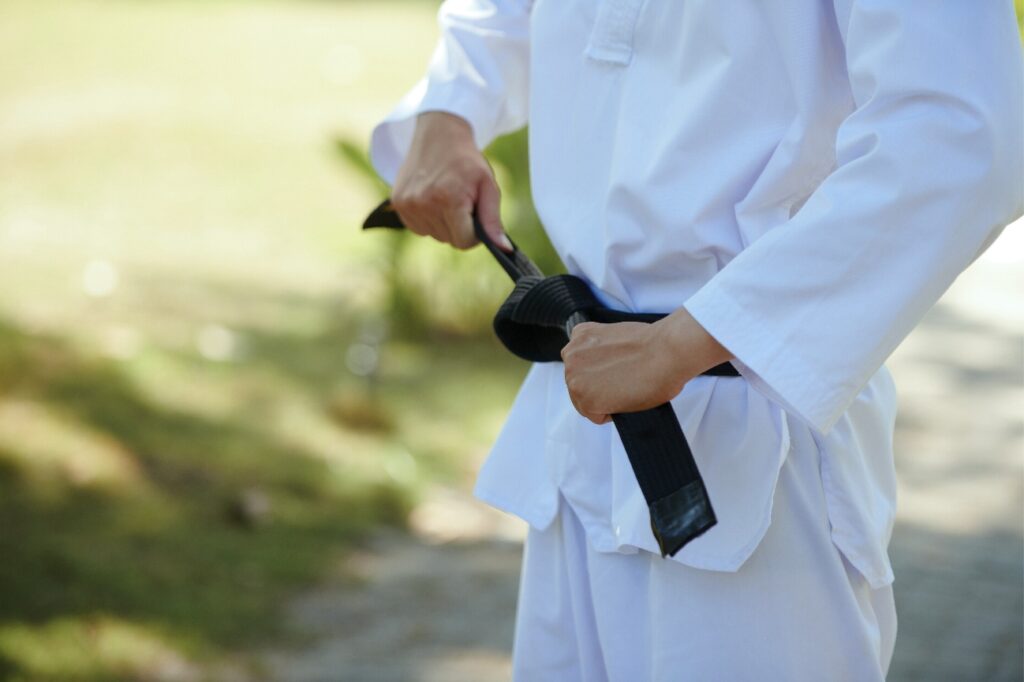
Why This Exam Marks a New Beginning
Attaining your black belt is not an endpoint—it’s a transition to deeper mastery, teaching, technical growth, and contribution to your club and community. As instructors, we also continue to refine our understanding, stay updated in training, and support others on their path.
Frequently Asked Questions
How far in advance should I start preparing?
Many serious candidates begin focused prep 3–6 months ahead, layering physical, technical, and mental work gradually.
Can I practice alone or do I always need a partner?
Solo (shadow) practice is vital, especially for transitions, movement and flow. But partner drills, reaction work and mock tests are also essential to simulate resistance.
Is it normal to fail on the first attempt?
Yes. The black belt exam is rigorous by design. Many excellent practitioners retake it after identifying weak areas and refining for the next attempt.
What’s the most common failure point?
Shadow Fighting is often cited as the most frequently failing segment—many candidates lose rhythm, cohesion, or decision logic under pressure. (FEKM-UK perspective)
Will achieving the black belt change my role?
Yes. Beyond personal achievement, many federations expect black belts to take on teaching, mentoring, or technical duties. Your development becomes part of the community’s growth.